No-prep veneers: what they are and who is a candidate
The question behind "will you file down my teeth?" is not vanity — it is fear of the irreversible. This is what makes no-prep technique different.
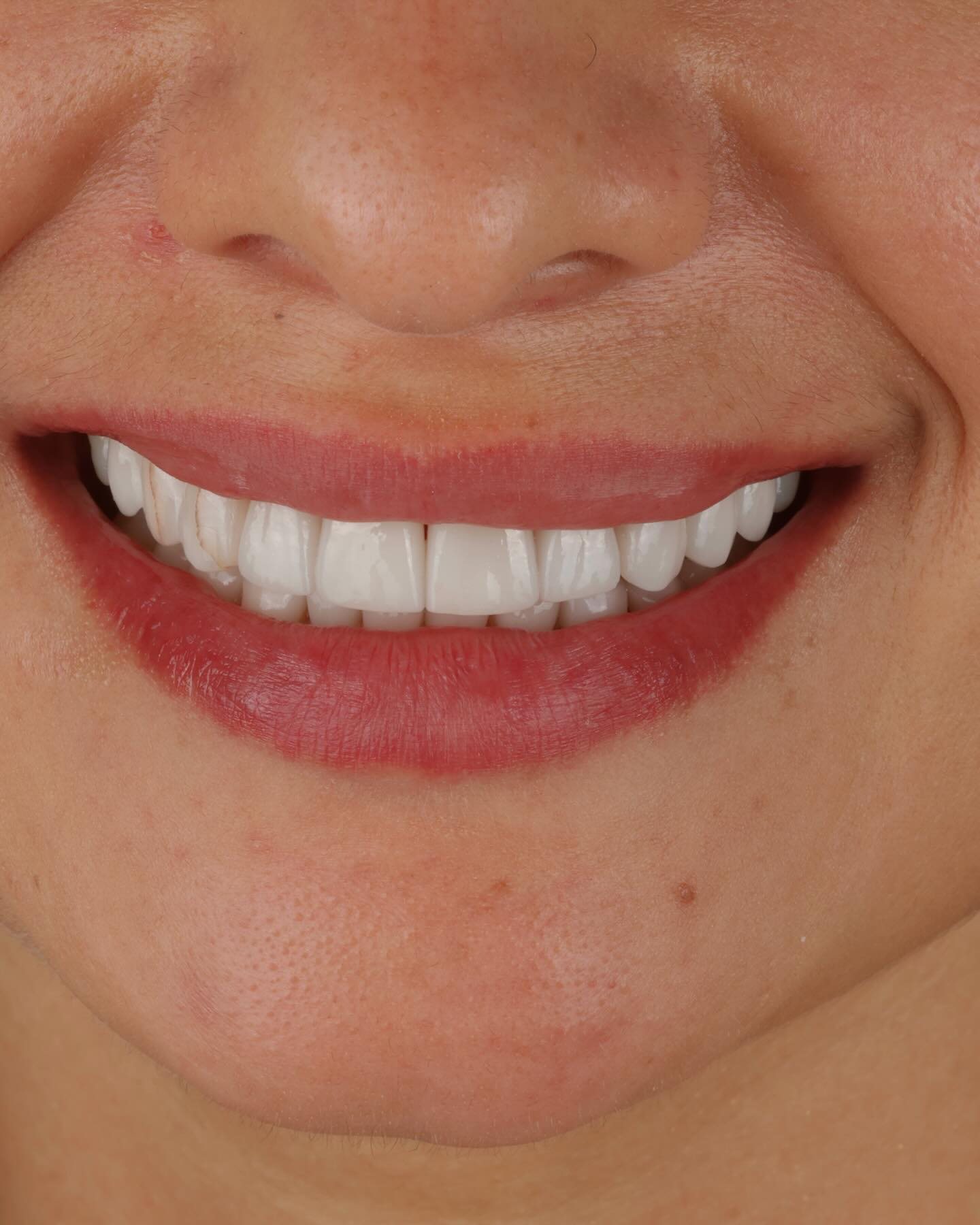
"Will you file down my teeth?" is the second most repeated question in consultation, and there is no vanity behind it: there is fear of the irreversible. Enamel does not grow back. What is removed is removed for good. That is why it is worth understanding what no-prep means before deciding.
What no-prep veneers are
They are very thin porcelain laminates bonded to the visible face of the tooth without reducing it, or removing a minimal amount of enamel. Compared with the traditional veneer, which requires the tooth to be trimmed to make room, the no-prep relies on the laminate being thin enough not to change the volume of the tooth.
Minimal preparation technique sits in between: just enough is refined at certain points, almost always without leaving the enamel.
Why staying within the enamel matters
Enamel is the outer layer of the tooth, and it is what porcelain bonds to best. When reduction goes past it and reaches dentine, two things change: the bond becomes less predictable and the tooth can become sensitive. Conserving enamel is not only an aesthetic concern — it is what holds the result together over time.
Who is a candidate
The technique works well when several conditions are met at once:
- Teeth that are small or short relative to the lip, or with gaps between them.
- Teeth worn down by friction or by bruxism that is already under control.
- Acceptable alignment: nothing badly overlapped or pushed forward.
- A shade that does not require masking a deep dark stain.
- Healthy gums and a stable bite.
When it is not possible, and why saying so matters
If a tooth already sits forward, placing a laminate over it would push it further still and the result would look bulky. Where there is significant crowding, it is better to align first with orthodontics or clear aligners and then decide whether veneers are needed at all. If the tooth is darkened by an old root canal, a thin laminate will not cover it.
A professional who promises you no-prep without examining you is not protecting your enamel: they are selling you a label. The technique is chosen after the diagnosis, not before it.
What it feels like and how long the process takes
Because the tooth is not reduced, in many cases no anaesthetic is needed to take the records and no uncomfortable temporaries are used. The treatment is resolved in a few appointments, and any sensitivity afterwards tends to be milder than with a conventional veneer — precisely because the enamel is still there.
Frequently asked questions
Do no-prep veneers look thicker?
Not when the indication is correct. They look thick when they are placed over teeth that already sat forward. That is exactly the case where the technique does not apply.
Are they reversible?
In cases where the enamel was not touched, removing them leaves the tooth as it was. That is the great advantage of the technique and the reason to prefer it when the case allows.
Do they last less because they are thinner?
No. What defines longevity is the bond to enamel, your bite and your habits. We cover it in how long veneers last.
How do I know if I am a candidate?
Only by examining your mouth. At the consultation the available space is measured, the bite is checked, and you are told clearly which technique your case requires.
Want to know what your case needs?
The consultation reviews your mouth, defines whether you are a candidate and gives you a written proposal with defined fees. It is a diagnostic appointment, not a sales appointment.