Getting treated in Cancún from out of town: how the trip is arranged
Travelling for treatment works when the appointments are planned around the trip, not the other way round. This is how it is organised.
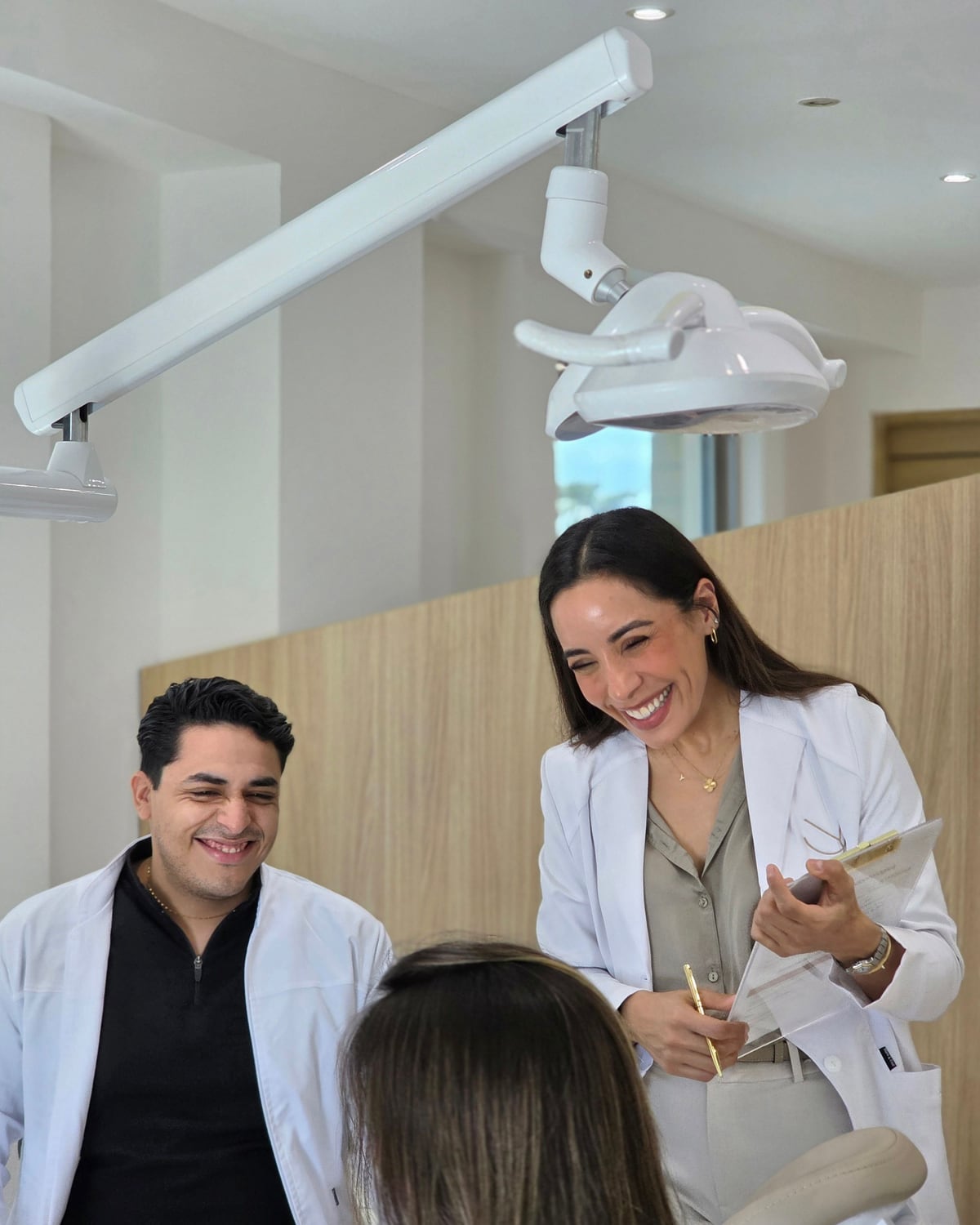
A share of the patients treated in Cancún do not live here: they arrive from other cities in Mexico, from the United States and from Canada. The most common mistake is not travelling for treatment — it is arriving without a closed appointment plan and discovering halfway through the trip that you need days you no longer have.
What can be resolved before you board
A good part of the preliminary work does not require you to be here:
- Remote assessment. With photographs taken following clear instructions and, if you have them, recent radiographs, we can make a first reading of your case and tell you whether you are a candidate.
- Preliminary plan and proposal. It comes out of that review, with the honest caveat that definitive confirmation happens in person.
- Appointment calendar. It is built before you buy a flight, not after.
What cannot be resolved remotely is the definitive diagnosis. A photo does not show decay between teeth, nor how your bite closes.
How the appointments are grouped
For someone who lives here, a smile design spreads comfortably over weeks. For someone travelling, the same stages are concentrated into blocks of consecutive days: in-person assessment and records at the start, try-in in the middle, definitive placement and adjustment at the end.
The stages are the same as always — they are described in the process appointment by appointment — only the way they sit on the calendar changes. What is never cut is the try-in: that step is not skipped to save a day.
How many days to stay
It depends on the case and the number of teeth, which is why the calendar is given to you before you book. The practical rule: leave a spare day at the end. Fine adjustments show up once you have spent a few hours with the new smile, and it is better to resolve them here than a thousand kilometres away.
What to ask before choosing a practice, wherever you come from
- Who will carry out the treatment? It should be the same person throughout.
- Does it include a try-in before anything definitive?
- What happens if something debonds once I am back home?
- Are the fees defined, or can they go up?
- Under which health registration does the practice operate?
That last question rules out more practices than you would imagine. This practice operates under COFEPRIS registration 2523022002A00086.
Follow-up from a distance
When you leave you take concrete care instructions and a direct line to write to. Most later questions are resolved by message with a photo. If something needs hands, it is coordinated — which is why it matters to choose a practice that answers after being paid, not only before.
Frequently asked questions
Can I split the trip in two?
Yes, and for some cases it is the most comfortable route: a first short trip for assessment and records, and a second for try-in and placement.
Can I dive or go to the beach during treatment?
You are advised according to the stage. With temporaries it is wise to be careful with anything very hard or sticky.
Is the practice English-speaking?
Yes. A share of our patients come from the United States and Canada.
How do I start if I live abroad?
By writing on WhatsApp with photos of your smile. From there come the first reading and a tentative calendar.
Want to know what your case needs?
The consultation reviews your mouth, defines whether you are a candidate and gives you a written proposal with defined fees. It is a diagnostic appointment, not a sales appointment.